By Todd Stein, DC·6 min read
Most people who put off seeing a chiropractor are not sceptical about whether it works. They are thinking about the sound.
You have heard it in a film, or through a wall, or from a friend who describes it with some relish. A sharp crack, a sudden movement, somebody’s full weight behind it. If that is the image in your head, the hesitation is reasonable, and it is the single most common thing people mention on the phone before a first visit here.
So it is worth saying plainly: at this practice, most visits involve no cracking at all.
Where we are
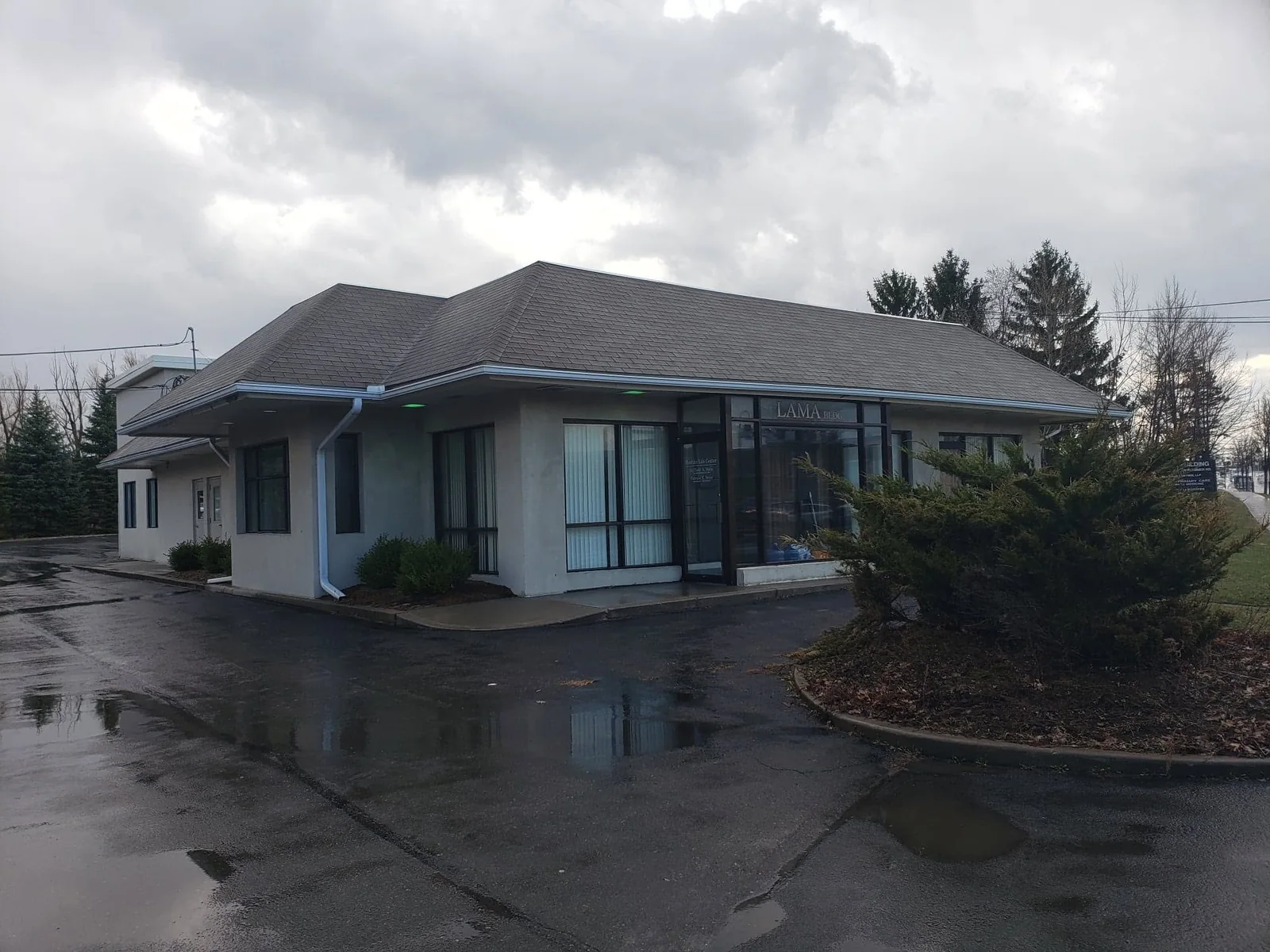
Healthy Life Center is at 2343 North Triphammer Road, in the LAMA building, a few minutes north of the Cornell campus on the Lansing side of Ithaca. There is parking directly outside, which in this town is not nothing.
Most of our patients come from Ithaca itself and from Lansing, Cayuga Heights, Dryden, Trumansburg, Freeville, Newfield and Groton. A fair number drive considerably further. Tompkins County is not large, but people come in from Cortland, Elmira, Owego and occasionally Syracuse, which is roughly an hour each way.
What mastery level actually means
Dr. Todd Stein has practised in Ithaca since 1996. He is licensed in New York, and his licence number is published on his page with a link to the state verification service, so you can check it yourself in about thirty seconds. Very few practices publish that. A credential a stranger can verify is worth more than any amount of copy saying how good someone is.
He is trained to mastery level in NetworkSpinal, the highest tier in that method’s training path.
It is worth being precise about what that is and is not. It is not a chiropractic board specialty, and it does not mean he can do something no other chiropractor can do. It means he has completed the full progression of training in a particular method, over many years, and has worked with it for most of a thirty-year career. In a method where the entire skill is in where you place your hands and how little force you use, that progression is the difference between performing a technique and knowing it.
| In practice since | 1996, in Ithaca |
| Qualification | Doctor of Chiropractic, New York Chiropractic College, 1994 |
| Also studied | Neurobiology, perception and consciousness, Cornell |
| NetworkSpinal | Mastery level, the highest training tier |
| Licensed | New York, number published and independently verifiable |
The two kinds of adjusting, and why one is quiet
This is the part that confuses people, so here is the distinction.
| Conventional adjusting | NetworkSpinal | |
|---|---|---|
| What happens | A quick, controlled thrust to a specific joint | Precise light contacts near the spine, with your breath |
| The sound | Often a pop. That is gas releasing in the joint, not bone | None |
| Force | Firm and brief | Light enough that people ask when it is going to start |
| Where | The joint being worked on | Mostly the top of the neck and the base of the spine |
| How long | Short | First visit about an hour, follow-ups often ten to twenty-five minutes |
Both are adjusting. One of them is loud.
Dr. Todd does both, and which one you get is a clinical decision made with you rather than a house style imposed on you. Plenty of people come here specifically because they want the quiet one. Some people prefer the conventional kind and say so, and that is a perfectly good reason to do it that way.
Light is not the same as passive, and that is the part the word undersells. Where the hands go on a given day comes out of what the assessment and the practitioner find that day. People who have had both usually say the gentle work takes more skill, not less.
Who else is here
Patricia Stein, LMT does the hands-on bodywork: therapeutic massage and manual lymphatic drainage, and the breath and attention work that runs alongside the chiropractic.
Dr. Mary Balliet, DC is in on Tuesdays, working with Applied Kinesiology and nutrition counselling.
You can book bodywork without being a chiropractic patient, and booking one does not sign you up for the other.
What a first visit involves
Set aside an hour.
It starts as a conversation about what brought you in. Then a hands-on assessment. Then, if it is useful, three non-invasive scans that record muscle activity alongside the spine, skin temperature left to right, and heart rate variability. Those are measurements taken the same way each time, so a year from now there is something to compare against rather than two people trying to remember what March felt like. There is a longer piece on exactly what they measure if you want the detail.
They are not diagnostic tests and they are not imaging. If imaging is warranted, that is a referral.
You stay fully clothed throughout. Follow-up visits are much shorter.
What it costs
A first visit is $299. That is the only price we publish. Everything else is quoted on the phone, and the front desk will tell you before you book rather than at the till on your way out.
We are out of network and do not bill insurance, which means we help you claim it back rather than letting a billing code decide how long your appointment lasts. There is more on the fees page, including CareCredit if paying up front is the obstacle, and a fuller explanation of what out-of-network actually means.
Being straight about what this is not
NetworkSpinal is widely taught and has a clear lineage. Its published literature is mostly case reports and practitioner surveys rather than controlled trials. That is a real limitation and we would rather tell you than have you find it somewhere else.
What we will tell you about is what happens in a session and what the measurements record. What we will not do is tell you what it will do for a particular condition, because nobody can honestly tell you that from the evidence that exists.
If you are dealing with something that needs a medical diagnosis, you need a physician, and we will say so rather than take the appointment.
If you want to come in
We are open Monday and Thursday mornings and late afternoons, Tuesday late afternoon, and Wednesday through the middle of the day. Closed Friday to Sunday.
If the sound is what has kept you away from chiropractic for years, it is not part of what we do here. That is worth one phone call to find out.
Also worth reading
- What the three scans at a first visit actually measure
Surface EMG, thermal and heart rate variability, explained plainly. What each one reads, what the numbers are for, and what they are not.
- Out of network: what that actually means for your wallet
Healthy Life Center does not bill insurance. Here is what that means in practice, what the paperwork looks like, and the questions to ask your own plan.
- I studied consciousness before I studied the spine
Dr. Todd Stein trained in neurobiology and perception at Cornell before chiropractic college. Thirty years on, that order still shapes how this practice works.